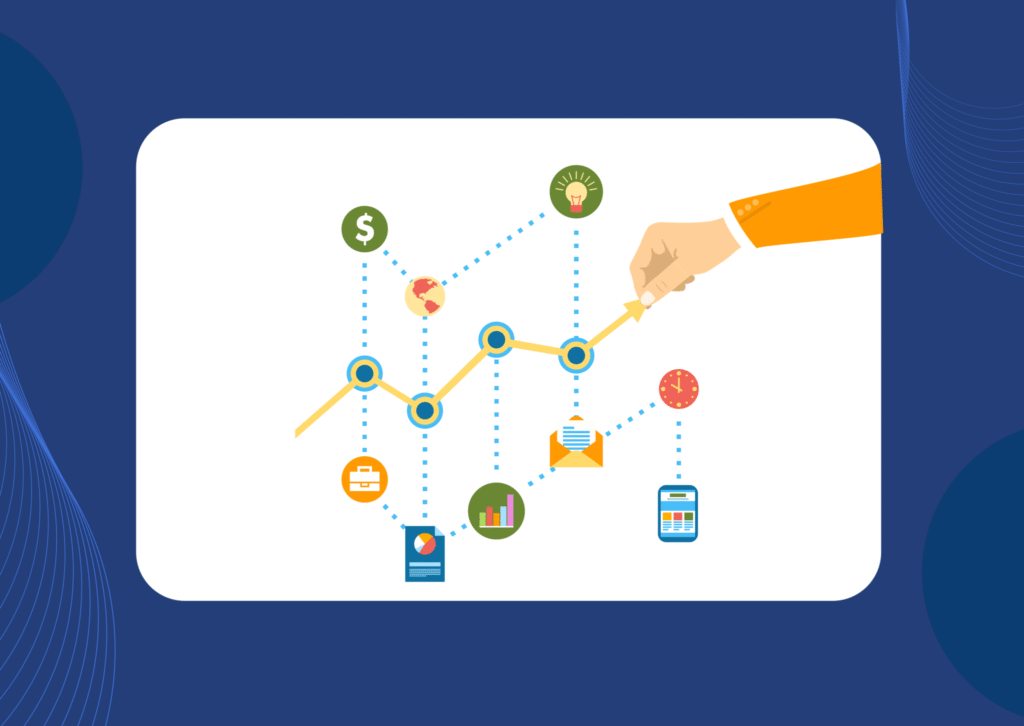
If you’re getting traffic but not conversions, or leads that stall after sign-up, the missing piece might be a clear understanding of your conversion journey — the real-world path a buyer takes from first interaction to decision.
This journey isn’t linear anymore. Buyers research, compare, hesitate, and return. If you’re not mapping and optimizing this process, you’re leaving revenue on the table.
Let’s walk through how to map your customer’s conversion journey — and use it to increase your ROI.
What Is a Conversion Journey?
The conversion journey is the full experience a customer has from awareness to action — like signing up, booking a demo, or making a purchase.
Think of it as a dynamic map of behaviors:
- ● First blog visit
- ● Ad click
- ● Free trial
- ● Email opens
- ● Demo request
- ● Onboarding and beyond
It’s more than a funnel. Funnels show stages. Journeys show real behavior — the emotions, pauses, and choices buyers make.
Why You Should Map It
Mapping your conversion journey helps you:
- ● Spot drop-off points and fix friction
- ● Align sales and marketing with shared insights
- ● Prioritize high-impact content and touchpoints
- ● Guide leads naturally, rather than pushing them
You’ll understand what drives action — and where your journey breaks.
Step 1: Define the Journey Stages
Most customer journeys follow these stages:
- Awareness – The buyer realizes they have a problem
- Consideration – They explore possible solutions
- Evaluation – They compare providers
- Decision – They take action (convert)
- Post-Conversion – Onboarding, support, upsell
Your goal is to identify what’s happening at each stage and how people feel at that point.
Step 2: List Every Touchpoint
Map out all the ways your customer interacts with your brand — even indirectly. These may include:
- Blog posts
- LinkedIn ads
- Lead magnets or webinars
- Product demo pages
- Conversational bots
- Email automation
- Pricing page
- Trial sign-up
- Support chat
Each touchpoint is a chance to build trust — or lose attention.
Step 3: Spot Where People Drop Off
This step is about data.
Look at your analytics:
- ● Where do people bounce on landing pages?
- ● Where do email opens not lead to clicks?
- ● How many leads drop off before booking a demo?
Tools like Google Analytics, Hotjar, or Mixpanel can help. This gives you a clear view of what’s working and what’s not.
Step 4: Improve Every Stage of the Journey
Here’s where you take action:
- Awareness: Publish helpful, search-optimized content that attracts early-stage interest.
- Consideration: Offer lead magnets like guides or checklists that capture emails and educate.
- Evaluation: This is where DemoKraft AI adds huge value. Instead of forcing users into a long sales cycle, let them engage with AI-powered video demos tailored to their interests.
- Decision: Simplify your CTAs. Make your value crystal clear.
- Post-Conversion: Use conversational onboarding to guide users step-by-step and reduce early churn.
The goal: Keep the buyer moving forward without friction.
Step 5: Test, Tweak, and Repeat
Buyer behavior evolves. Your journey map should too.
- ● Test new subject lines and landing page copy
- ● Experiment with demo formats
- ● Use heatmaps to refine page layouts
- ● Adjust your nurture emails based on engagement
Use data to keep improving.
Final Thoughts
A well-mapped conversion journey doesn’t just improve conversions — it aligns your entire team, sharpens your messaging, and helps buyers make decisions naturally.
Instead of guessing what your customers want, you’ll see exactly where to meet them — and how to guide them to take action.